Your breakout’s gone, but the mark it left behind is still there weeks later: a flat red patch, or maybe a brownish shadow where the pimple used to be. It’s easy to look at that and think “scar.” Most people do. But a flat mark and a true scar aren’t the same thing, and knowing the difference changes what actually helps. Redness, pigmentation and structural scarring all happen through different Read more...
If your skin feels a bit rough under your fingertips or looks bumpy in certain light, it’s tempting to look for the one product that will “fix” it. Here’s the thing, though: textured skin isn’t one problem with one cause. The same word gets used to describe dry patches, congestion, enlarged-looking pores, active breakouts, old acne scars, fine lines, or skin irritated by one too many products. It’s also worth Read more...
Noticed the skin on your arms, chest, neck or under your eyes looking a bit thinner and finely wrinkled lately — a texture that reminds you of crepe paper? You’re not imagining it, and you’re definitely not the only one asking Google about it. “Crepey skin” isn’t a medical diagnosis, by the way — it’s just a handy way of describing a texture change that can turn up for a Read more...
If you have cellulite, you’re certainly not alone. It’s incredibly common, particularly on the thighs and buttocks, and it can appear whether you’re a size 8 or 18, exercise every day or rarely set foot in a gym. So, what causes cellulite? It actually has much more to do with what’s happening underneath the skin than simply how much body fat you have. Cellulite develops through a combination of the Read more...
Body Dysmorphic Disorder and Cosmetic Medicine: What Every Patient Should Know “I just want to feel like myself again.” I hear some version of this sentence often, and most of the time it’s said by someone with perfectly reasonable, realistic goals. But every so often, it’s said by someone who’s already had several procedures, still isn’t happy, and is convinced the next one will finally be the one that fixes Read more...
Artificial intelligence can answer questions in seconds. Upload a photograph, describe what is concerning you, and an AI tool may produce a detailed analysis of your face. It might identify uneven skin tone, lines, changes in texture or areas where the skin appears less firm. It may even suggest treatments that sound highly personalised. That can feel impressive. But recognising visible features in a photograph is not the same as Read more...
You used to be able to slap anything on your face without a second thought. Now your skin has opinions. A new cleanser leaves it burning. A change in weather turns your cheeks pink for the rest of the day. A product you’ve used for two years suddenly makes you itch. Sound familiar? You’re not imagining it, and you’re not being dramatic. Sensitive, reactive skin is one of the most Read more...
Somewhere in your 40s, you might catch yourself standing in front of the mirror thinking, “my skin just isn’t behaving the way it used to.” Your usual moisturiser doesn’t quite cut it anymore. Your skin looks a little duller by mid-afternoon. A product you’ve used for years suddenly leaves your cheeks pink and tight. You’re not imagining it, and you’re not alone. This is one of the most common things Read more...
Understanding Non-Invasive Body Sculpting and Its Benefits No matter how healthy you eat or how often you exercise, some areas of the body can be surprisingly stubborn. For some people it’s the abdomen. For others it’s the thighs, flanks, upper arms, or areas that simply don’t seem to respond to lifestyle changes. Traditionally, surgery was often seen as the only option for addressing these concerns. Today, advances in non-invasive body Read more...
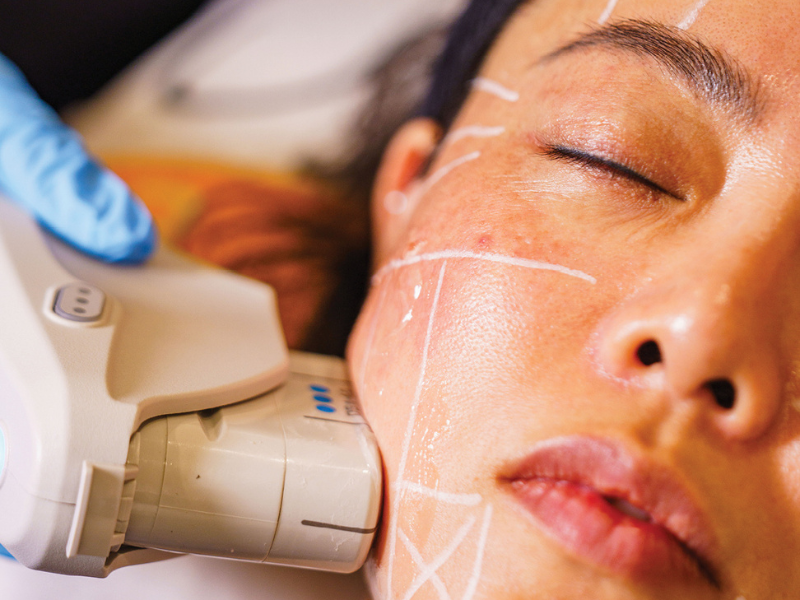
If you’ve been researching non-surgical skin tightening treatments lately, you’ve probably come across two names over and over again: Ultherapy PRIME® and HIFU. At first glance, they can sound very similar. Both use ultrasound technology.Both are designed to support collagen production.Both are commonly used for concerns like skin laxity, jawline softening, and sagging around the lower face and neck. So naturally, one of the most common questions we hear at Read more...